
Chinatown in New York: a complete guide to the neighborhood
A Chinatown itinerary in New York reveals much more than cheap souvenirs or counterfeit goods. The area is one of the most important Chinese communities outside Asia and keeps its history alive amid the fast pace of the city.
By including Chinatown in your travel planning, the experience goes beyond the galleries of Canal Street. The neighborhood preserves traditions, authentic flavors, and cultural landmarks that help explain how this community became a symbol of resilience in Manhattan.
My name is Fábio Angheben, creator of Dicas Nova York. I’ve lived in the city since 2019 and have explored Chinatown at different times, always in search of new discoveries and experiences that go beyond stereotypes.
In this content, the goal is to present a different Chinatown—one that remains strong despite real estate speculation and offers a wide range of cultural, gastronomic, and leisure options to enjoy during your visit.
Why visit Chinatown in New York?
Chinatown is a cultural immersion in Manhattan, filled with traditions, flavors, and stories from the Chinese community.
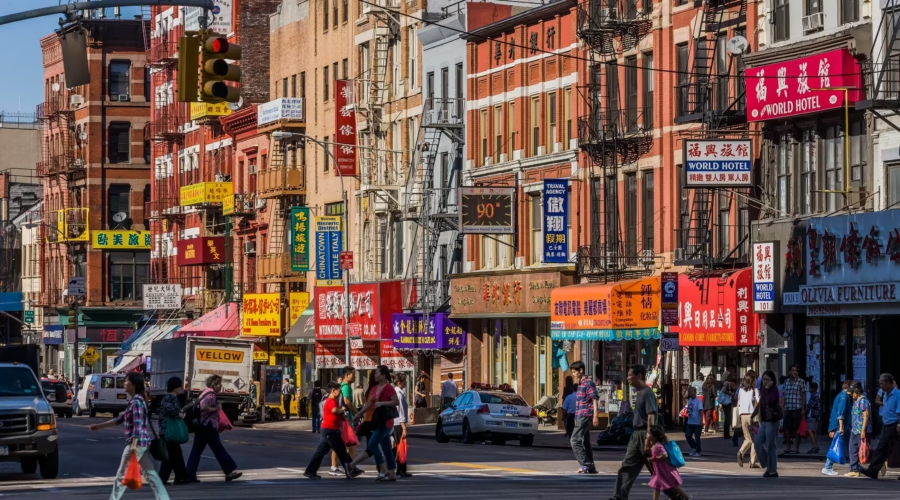
Visiting Chinatown is one of the best ways to experience the city’s cultural diversity. Walking through its narrow streets, lined with signs in Mandarin and Cantonese, gives you the feeling of being in another country—without leaving Manhattan.
An itinerary in New York’s Chinatown doesn’t have to be limited to souvenir shops. The neighborhood holds tradition, resilience, and an atmosphere that shows how the Chinese community helped shape the city’s identity.
For years, local shop owners and residents have faced pressure from real estate speculation. As seen in Brooklyn and Harlem, urban growth brings changes that threaten the neighborhood’s original character. Even so, Chinatown endures and remains an authentic space.
Another defining moment for the area was the impact of September 11, when many restaurants and shops were forced to close. Some of these effects can still be felt today, but the community remains alive and active.
Chinatown is worth including in your travel plans for reasons that go far beyond shopping:
- Discover the cultural and historical heritage of the Chinese community.
- Explore temples, markets, and streets full of tradition.
- Enjoy authentic dishes in family-run restaurants.
- Understand the importance of this neighborhood as a symbol of resilience in New York.
When planning a Chinatown itinerary, the goal is to value its cultural side and appreciate every detail that keeps the essence of this truly unique neighborhood alive.
Chinatown Itinerary in New York
Start early from Canal Street and discover markets, temples, and streets full of character.
My Chinatown itinerary in New York began early, at 7 a.m., before the heavy flow of tourists and street vendors. This time of day makes it easier to take cleaner photos and observe historical details without rushing.
The first stop was the Canal Street subway station. From there, I walked to Baz Bagel, a simple eatery that’s ideal for starting the day with a fresh bagel. It’s located on the border between Little Italy and Chinatown, showing how New York blends cultures within just a few blocks.
After breakfast, I walked to Canal Street, where there’s an official map with all the streets of Chinatown. This spot served as a base for exploring the area and planning the route.
If the idea is to create a relaxed Chinatown itinerary, the tip is to start along the same path and then move on to:
- Traditional restaurants to try the local cuisine.
- Historic streets with Chinese signage.
- Markets that reflect the community’s daily life.
- Cultural spaces that help explain the neighborhood’s history.
This was the starting point for the itinerary, which will be detailed in the next sections, highlighting each stop worth including in your visit.
1. Manhattan Criminal Court
The courthouse is still in operation and has served as a setting for famous TV series, blending real history with pop culture.
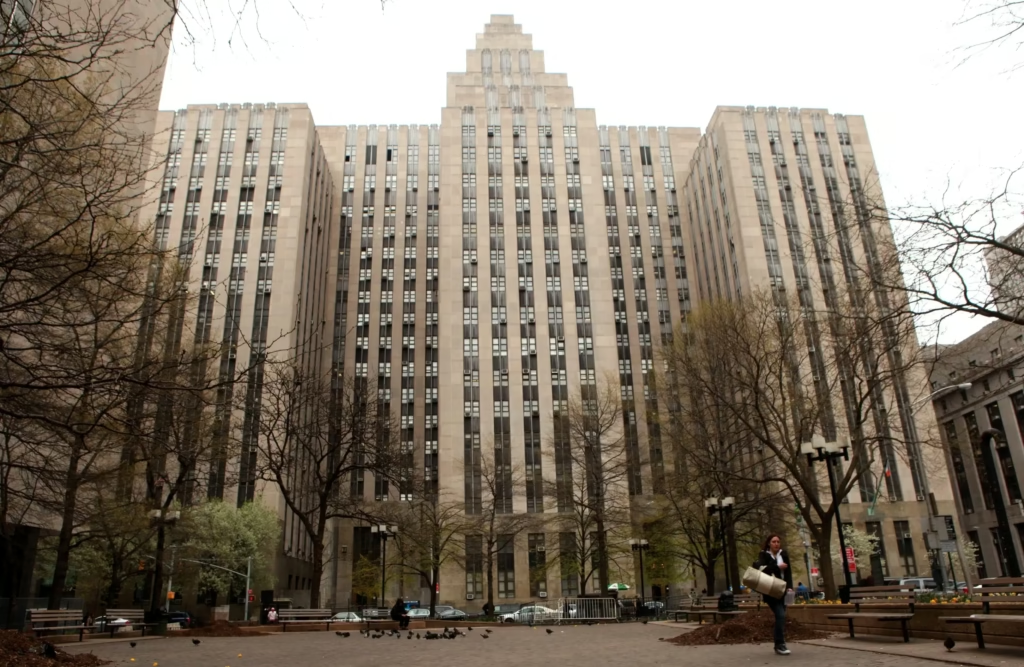
Continuing the Chinatown itinerary in New York, one of the first stops was Baxter Street, home to the Manhattan Criminal Court building. The site has strong ties to the city’s history and still operates at a busy pace today.
In the past, there was a House of Detention next to the courthouse, where criminals were taken right after sentencing. The prison was demolished, but the court remains active and is open to the public.
The surrounding area is always busy due to the presence of police officers, making this part of Manhattan one of the safest places to walk.
Another interesting detail is that the courthouse has appeared in well-known productions such as Law & Order, The Good Wife, and Suits, which makes the visit even more appealing for fans of TV series.
Including this stop in a Chinatown itinerary is a great way to see up close a historic space that blends the city’s real life with pop culture settings.
2. Columbus Park
A park that replaced the violent Five Points is now a symbol of tradition and community gathering.
Columbus Park is one of the most striking stops on a Chinatown itinerary in New York. Early in the morning, it’s common to see elderly Chinese residents practicing tai chi chuan, accompanied by soft music that creates a sense of calm amid the city’s bustle.
The site has a fascinating history. In the 19th century, this area was known as Five Points, infamous as one of the most violent parts of New York, marked by crime and gang conflicts. The film Gangs of New York portrays this era well.
With the construction of the park in 1911, the neighborhood left that period behind. Today, the space is a symbol of the Chinese community and a perfect place to observe how tradition and history blend into everyday life.
Including Columbus Park in a Chinatown itinerary allows you to experience up close a place that represents cultural resilience and, at the same time, the city’s transformation.
3. Mosco Street
A historic street home to Fried Dumpling, famous for its cheap and flavorful pork dumplings.
On a Chinatown itinerary in New York, Mosco Street deserves special mention. This street is part of the former Five Points area and still carries traces of local history, blending tradition and modern life within just a few meters.
It’s here that you’ll find Fried Dumpling, a simple restaurant well known for its fried pork dumplings. Prices range from $1 to $5, making it a quick and affordable stop for anyone looking to try local cuisine.
During my visit, I arrived early, around 8 a.m., and decided to try it at another time. Even so, Mosco Street is well worth including in a Chinatown itinerary, whether for its typical food or for the atmosphere that helps you better understand the neighborhood’s essence.
4. Mott Street
It brings together shops, the Church of the Transfiguration, and the traditional Aji Ichiban candy store.
On a Chinatown itinerary in New York, Mott Street is a must-see stop. Known for its souvenir shops and markets, the street combines constant activity, tradition, and cultural landmarks that tell the story of immigration in the city.
One of the highlights is the Church of the Transfiguration, built in 1801. Originally attended by Italian and Irish communities, the church became the largest Chinese Catholic center in the Western world, with Masses celebrated in English, Mandarin, and Cantonese.
Outside, it’s worth taking photos with the One World Trade Center in the background.
Another interesting spot on Mott Street is the Aji Ichiban Candy Shop, a traditional store selling sweets and treats from Asia. Among different candies and gums, you can find unusual flavors for Western palates, such as wasabi candy, which stands out for its novelty.
Including Mott Street in a Chinatown itinerary means experiencing a bit of the blend of religion, commerce, and culture that defines the neighborhood’s identity.
5. Pell Street
A small street with Chinese signs, barbershops, and restaurants that reveal the neighborhood’s everyday life.
Pell Street is one of the most authentic stretches of a Chinatown itinerary in New York. Storefronts are covered with Chinese signage, fire escapes are everywhere, and the overall feeling is of being in a space organized according to the local community’s way of life.
This street packs an impressive number of businesses into just a few meters. It’s easy to find:
- Traditional barbershops
- Hair salons
- Small, busy restaurants
Exploring Pell Street as part of a Chinatown itinerary is a true dive into the neighborhood’s daily life, full of the energy and authenticity that make this area so unique in Manhattan.
6. Doyers Street
A narrow curve marked by the former Chinese theater and the traditional Nom Wah tea house.
Doyers Street is one of the most interesting stops on a Chinatown itinerary in New York. The street is a tight curve lined with small shops and Chinese hair salons side by side, creating a scene that feels straight out of a movie.
One of the most notable buildings on the street once housed the first Chinese theater in the United States, opened in 1893. Its history was short-lived, as the area was violent at the time, with records of crime and gang disputes. The theater closed in 1901, and today the building no longer has a defined use.
Another historic highlight is the Nom Wah Tea Parlor, opened in 1920. Considered the city’s first Chinese tea house, it remains in operation to this day and has been run by the same family since the 1940s.
Including Doyers Street in a Chinatown itinerary means exploring a street full of memories, where each façade carries a piece of the history of the Chinese community in New York.